
Dewatering Pump Manufacturer: Solutions for Mining, Construction & Water Management
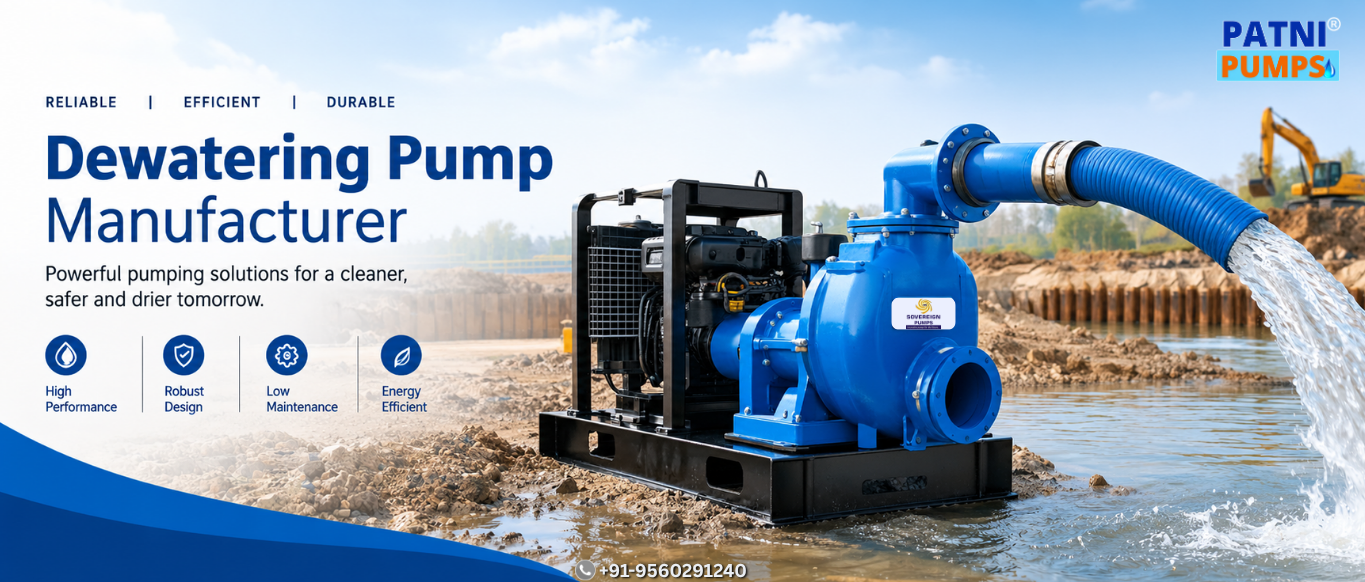
Water can become a serious operational problem when it collects where work is taking place.
An excavation fills with groundwater. A tunnel develops water accumulation. Rainwater collects in a construction area. A mining site needs continuous drainage. In each situation, removing the water is not simply about moving liquid from one point to another. The pump has to match the site conditions, required flow and pumping head’s.
This is where choosing the right Dewatering Pump Manufacturer and pumping partner becomes important.
Where Dewatering Becomes Critical
Dewatering is required wherever unwanted or accumulated water needs to be removed to keep a working area functional.
Common applications include:
- Construction sites and foundations
- Excavation projects
- Mining and quarrying
- Tunnelling and underground work
- Infrastructure projects
- Industrial drainage
- Basements and underground structures
- Large sumps and water collection areas
‘PATNI PUMP' dewatering range includes submersible electrical pumps designed for construction, excavation, mining, tunnelling and industrial water-removal applications.
Why Submersible Pumps Are Useful
In many dewatering situations, the water collects in a low-lying area where placing the pump directly into the water can simplify the setup.
A submersible dewatering pump operates while submerged and transfers accumulated water through a discharge arrangement. This makes the configuration practical for sumps, excavations and other locations where water collects below the working level.
However, submersible does not automatically mean that every pump is suitable for every site.
The actual hydraulic requirement still matters.
The Numbers That Matter Before You Buy
One of the most common mistakes in pump selection is focusing only on horsepower.
A better starting point is the complete pumping requirement.
|
Selection Factor |
Why It Matters |
|
Flow rate |
Determines how much water needs to be removed within a given time |
|
Total head |
Indicates the height and resistance against which water must be pumped |
|
Water depth |
Influences pump installation and operating conditions |
|
Discharge distance |
Affects the hydraulic requirement |
|
Discharge size |
Needs to match the required flow and system arrangement |
|
Water condition |
Clean water and solids-containing water may require different pump designs |
|
Duty cycle |
Helps determine the suitability for the expected operating pattern |
|
Power supply |
Determines whether an electric or alternative arrangement is practical |
PATNI PUMP itself recommends considering flow, total head, water depth, discharge distance and operating conditions rather than selecting a pump based on HP alone.
Mining and Construction Need Different Thinking
Consider a construction excavation after heavy rainfall.
The immediate requirement may be to remove standing water quickly so that work can continue. A mining operation, on the other hand, may involve deeper working areas, greater pumping heads and demanding operating conditions.
A tunnel or underground project can present another challenge because water may accumulate at points that are difficult to access.
This is why dewatering equipment is available in different HP and head configurations. PATNI PUMP lists medium-head, high-head and heavy-duty submersible electrical dewatering options for different project requirements.
When a Standard Dewatering Pump Isn't Enough
Water quality is another consideration.
If the liquid contains significant quantities of solids, sludge or abrasive material, a conventional dewatering pump may not be the most suitable option.
For these conditions, PATNI PUMP also offers non-clog pumping solutions for wastewater, slurry, industrial drainage and other solids-containing liquids. Its listed non-clog range includes SPNC63M, SPNC83M and SPNC103M models.
The distinction is useful: the right pump depends on what is being pumped, not just where it is being pumped.
What Should You Ask a Pump Supplier?
Before approaching a Dewatering Pump Manufacturer, prepare the following information:
- Required flow rate
- Total pumping head
- Water depth
- Discharge distance
- Discharge pipe size
- Water condition and solids content
- Available electrical supply
- Expected operating hours
- Installation location
- Project application
Having these details ready makes technical discussions much more productive.
Why PATNI PUMP?
PATNI PUMP LLP works as a marketing partner of Sovereign Pumps and brings more than 50 years of experience in the pumps and motors field to its pumping solutions. Its portfolio covers dewatering, sewage/wastewater, slurry, non-clog and diesel-driven/auto-prime pumping requirements.
For dewatering applications specifically, the company offers submersible electrical pumps across different HP and head configurations and provides guidance on pump selection based on project requirements.
This application-focused approach matters because two projects with the same water-removal requirement on paper may still have different hydraulic and site conditions.
The Right Pump Starts With the Right Information
Dewatering is ultimately about keeping water from interfering with work.
Whether the application involves a construction excavation, mining site, tunnel, infrastructure project or industrial facility, pump selection should begin with actual site requirements rather than a model number or horsepower figure.
PATNI PUMP can be approached with details such as flow requirement, pumping head, discharge size, solids content and site conditions to identify a suitable pumping solution.
For projects looking for a Dewatering Pump Manufacturer or technical pumping partner in India, visit PATNI PUMP to explore the dewatering range and discuss your application requirements.